
UX research & discovery
Understand user goals, pain points, and product context before deciding what to design.
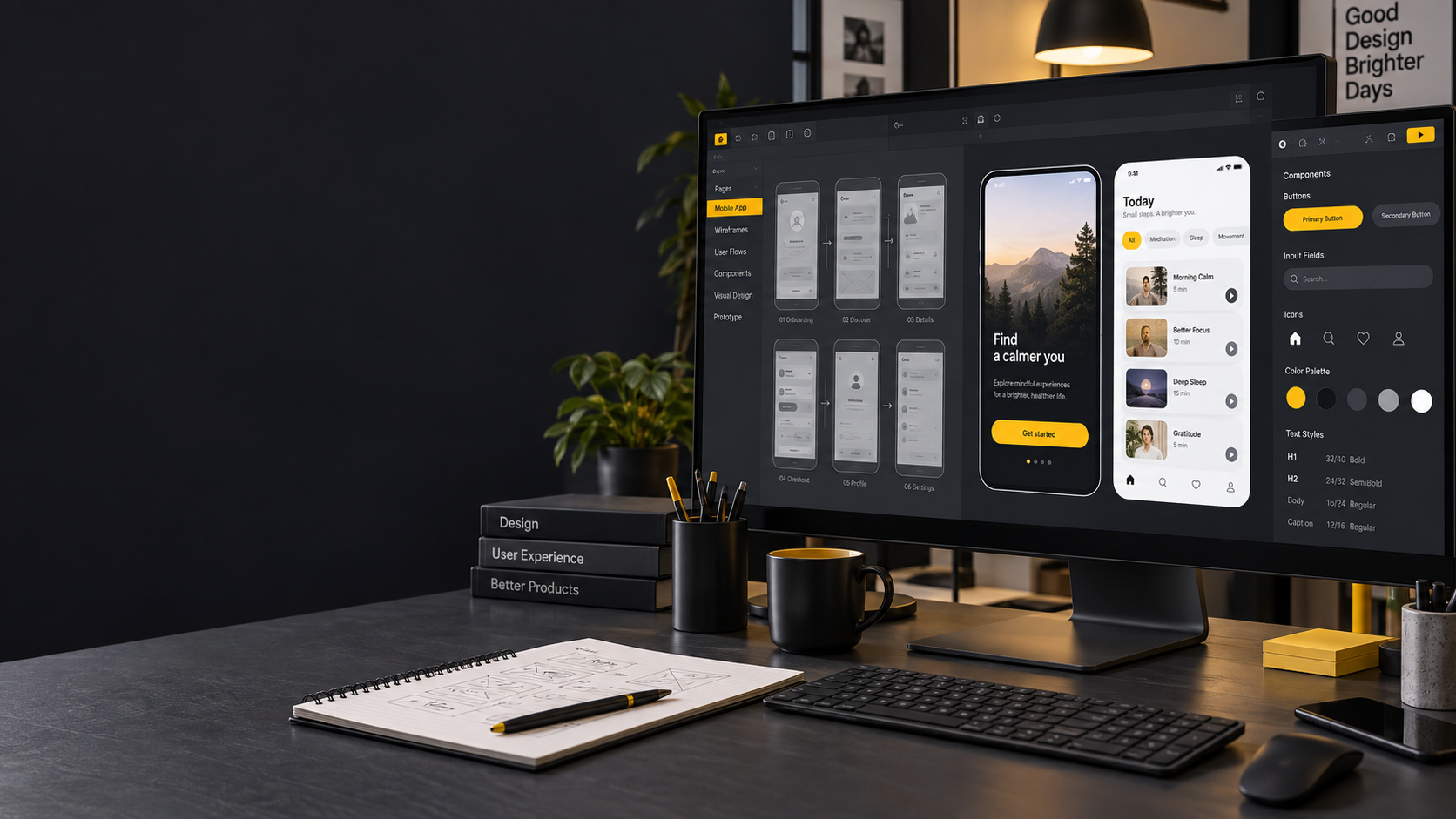
Digital experiences shaped around the tasks people need to complete, from first interaction to confident everyday use.
Good design starts by understanding users and their goals. We connect research, content, and interactions into experiences that feel clear and consistent.
Whether you are designing a new product or improving an existing one, we start with real journeys and test ideas before refining the details.





Focused design work for the journeys, interfaces, and systems your audience depends on.
Understand user goals, pain points, and product context before deciding what to design.
Organize content, navigation, and tasks so people can find their way without guesswork.
Map key journeys and screen structure before committing to visual polish.
Create clear interfaces and reusable components that stay consistent as the product grows.
Make interactions tangible, test them with users, and refine what creates friction.
Give developers usable specifications and keep improving from real product feedback.
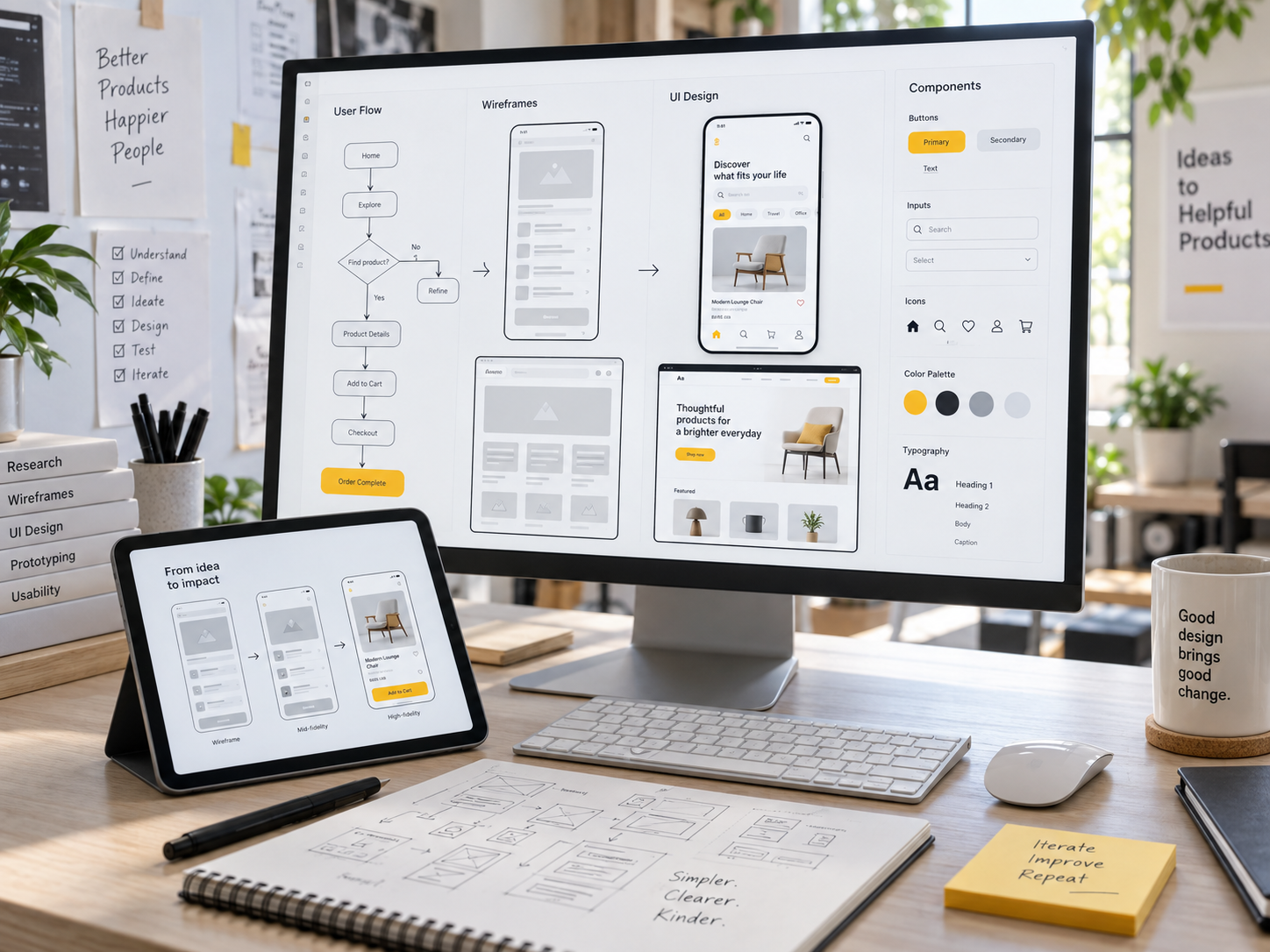
The best interfaces give people the right information at the right moment. We turn product goals into understandable flows, polished screens, and reusable patterns.
Start with the tasks people need to complete and the questions they have along the way.
Define type, color, components, and states that make the interface feel cohesive.
Document interactions and edge cases so development stays true to the intent.
A collaborative process that keeps user needs visible and the next decision grounded in evidence.
Learn about users, product goals, existing journeys, and where people get stuck.
Map flows, content hierarchy, and the structure of each key screen.
Create visual concepts and interactive prototypes for the important journeys.
Use feedback to refine the design, then hand over clear implementation guidance.
A thoughtful interface works across people, devices, and the moments that do not go exactly to plan.
Useful labels, hierarchy, and feedback help people know where they are and what happens next.
Readable content, considered contrast, keyboard paths, and clear states are part of the design work.
Reusable patterns make the experience easier to learn and the product easier to extend.
Yes. We review existing journeys and usability issues, then focus on changes that make the greatest difference. We start with the people using the product and the outcomes you want to improve.
We can review analytics, existing feedback, workflows, and user needs to prioritize design decisions while keeping the scope practical for your team.
Yes. We plan responsive layouts and interaction patterns around the devices your audience uses, including important states and testing.
Yes. Prototypes help validate navigation, screen flows, and key interactions before development begins. Important feedback can be incorporated before implementation.
We can define reusable components, visual rules, and interaction states suited to the product, with a clear handover for day-to-day use and future design work.
We consider semantic structure, contrast, keyboard use, readable content, and clear interaction states around the product's requirements, then review them as the product evolves.
Yes. We can provide design files, specifications, and review support during implementation, then use real feedback for ongoing product improvements.